

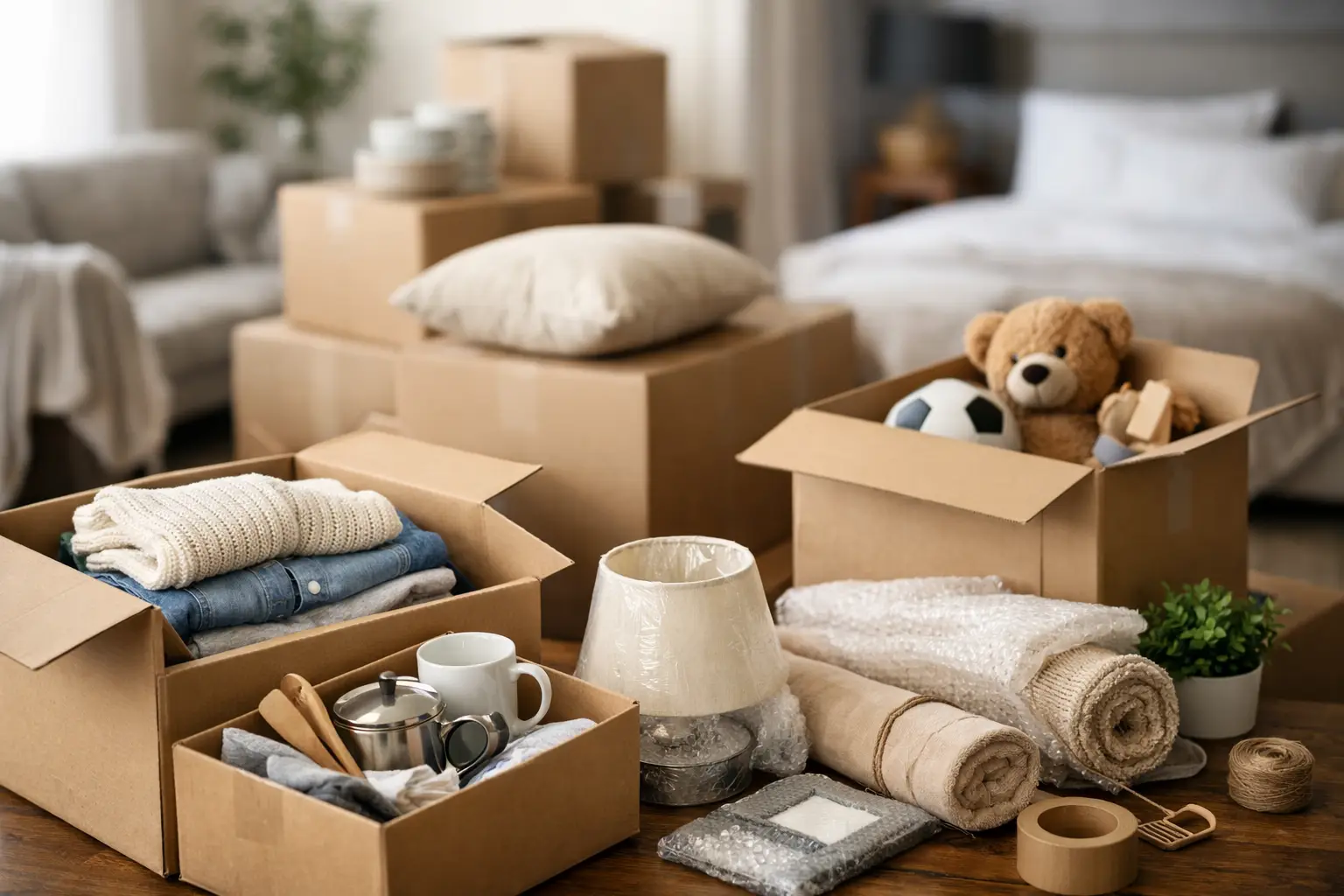
The question of what to pack before moving is less about filling boxes quickly and more about protecting your daily routine. If the coffee maker, medications, work laptop, school forms, or pet supplies disappear into the wrong box, the first night in a new home becomes much harder than it needs to be. A good packing plan keeps essential items close, reduces last-minute decisions, and gives movers a clearer, safer space to work.
Start earlier than you think, but do not pack every room in the same order. Begin with the things you use least, leave daily necessities until the final days, and create a clearly marked essentials box that travels with you.
Start with a packing plan, not empty boxes
Before packing, take one walk through your home with a notepad or phone. Identify what is moving, what will be donated or sold, what needs special handling, and what should be disposed of. Moving items you no longer want costs time, space, and often money.
Set aside a small packing station in one area of the home. Keep boxes, tape, markers, labels, packing paper, scissors, and bags together so you are not searching for supplies every time you finish a room. Use sturdy boxes for books and heavy household goods, and larger boxes for lighter items such as linens, pillows, and lampshades.
Label each box on at least two sides with the destination room and a short description of the contents. “Kitchen” alone is not enough. “Kitchen - baking dishes” or “Kitchen - everyday plates” helps you decide what to unpack first. If a box needs careful handling, mark it clearly as fragile and avoid placing heavy boxes on top of it.
Pack the least-used rooms first
The easiest place to begin is wherever you store items that are already out of rotation. Guest rooms, basements, attics, storage closets, seasonal decor, and spare linens can usually be packed weeks before moving day.
Storage areas, closets, and seasonal items
Pack holiday decorations, off-season clothing, sports equipment you will not use before the move, extra bedding, photo albums, and stored keepsakes first. This is also the right time to sort donation items. Keep a separate donation bag or box so unwanted belongings do not make their way back into your moving load.
For clothing, use whatever method fits your timeline. Folded clothes can go into boxes or suitcases. Hanging clothes can stay on hangers and be placed in wardrobe boxes or covered in groups with large bags. Shoes should be paired and packed in smaller boxes so they do not become too heavy.
Books, decor, and wall items
Books are compact but heavy. Use small boxes, fill gaps with paper, and stop before the box becomes difficult to lift. Pack framed art, mirrors, and decorative glass separately with padding around each piece. Do not rely on a blanket alone for fragile frames with glass.
Take photos of wall arrangements, entertainment centers, and cable connections before disassembling them. Those photos can save time when you are setting up your new home.
What to pack before moving from the kitchen
The kitchen often takes the longest because it contains many small, breakable, and regularly used items. Begin by packing specialty appliances, serving dishes, cookbooks, extra mugs, and pantry items you will not need before the move. Use up frozen food and open pantry products when possible rather than moving more than necessary.
Keep daily dishes, one pot, basic utensils, and a few cups available until the final day. When packing dishes, place packing paper between each piece and stack plates vertically rather than flat when possible. Wrap glasses individually and fill empty spaces so they cannot shift in transit.
Do not pack food that may spill, leak, or spoil unless you are certain it can be moved safely and promptly. Check with your moving provider about restrictions for items such as alcohol, open cleaning products, or perishable food.
Set aside kitchen items for the first 24 hours: a can opener, paper towels, dish soap, a sponge, reusable water bottles, coffee or tea supplies, and basic snacks. These small items make a noticeable difference after a long day.
Handle bedrooms with an eye on the first night
Bedrooms should be packed in stages. Start with out-of-season clothing, extra linens, decor, and books. Pack everyday clothing during the final few days, leaving enough for the move and the first few days after arrival.
Each person should have a personal overnight bag with clothing, toiletries, chargers, medications, and any comfort items they need. For children, include a favorite stuffed animal, blanket, book, or bedtime item. Familiar belongings can make the transition easier, especially when the new bedroom is not fully set up yet.
Keep bedding for each bed together in a labeled bag or box. If you know where the sheets, pillows, and blankets are, you can make beds quickly even if the rest of the room remains unpacked.
Pack bathrooms last, but prepare early
Bathrooms are small, yet they contain items that people need right away. Several days before the move, pack backup towels, extra toiletries, and rarely used cosmetics. Dispose of expired medications and empty products that are not worth transporting.
Keep one bathroom kit accessible for moving day and the first night. It should include toilet paper, hand soap, toothbrushes, toothpaste, towels, shower supplies, a basic first-aid kit, and any daily prescriptions. Put liquids in sealed bags to prevent leaks.
If you are moving with young children, include diapers, wipes, and any required care supplies in the essentials bag rather than packing them with household goods.
Create an essentials box that stays with you
Your essentials box is not just another labeled carton. It should travel in your vehicle or remain clearly separated from the moving truck. Pack items that would cause immediate problems if they were delayed, misplaced, or packed beneath other boxes.
Include these distinct categories:
- Identification, moving paperwork, keys, lease or closing documents, and emergency contacts
- Medications, glasses, chargers, laptops, wallets, and other valuables
- Basic cleaning supplies, trash bags, paper towels, toilet paper, and a utility knife
- Snacks, water, pet supplies, and easy meals for the first day
- A change of clothes, toiletries, towels, and bedding for the first night
If you are moving into a home that may need cleaning before boxes come inside, make the cleaning supplies easy to reach. A broom, all-purpose cleaner, cloths, and gloves can be more useful than another box of decor.
Separate items movers may not transport
Professional moving crews often have limits on hazardous or high-risk items. Gasoline, propane tanks, fireworks, certain chemicals, and other flammable materials are common examples. Batteries, paint, and cleaning products may also require special handling depending on the item and the move.
Review your moving company’s policy before packing the garage, shed, or utility area. If an item cannot travel on the truck, plan ahead for safe disposal, storage, or personal transport. Never hide restricted materials in unmarked boxes. That creates a safety issue for everyone involved.
Give electronics, documents, and valuables extra attention
Back up important files before disconnecting computers and hard drives. Keep small electronics, remotes, cords, and chargers together in labeled bags. For larger electronics, use original packaging when available or ask your moving coordinator about appropriate protection.
Important documents should not be loaded into a general moving box. Carry passports, birth certificates, legal records, insurance paperwork, financial documents, and estate documents with you. This is especially important during an estate move or property clear-out, where paperwork may be needed throughout the process.
Jewelry, heirlooms, cash, and irreplaceable small valuables are usually best kept in your personal possession. For fragile or sentimental items that need special attention, discuss handling expectations before moving day rather than making assumptions at pickup.
Finish with a simple moving-day routine
The night before the move, charge phones, confirm your arrival plan, set aside keys, and keep the essentials box by the door. Walk through each room, open closets and cabinets, and check behind doors. These are the places where small but important items are often left behind.
On moving day, avoid adding unlabeled boxes at the last minute. If something must be packed quickly, write the room and contents directly on the box before it leaves your home. Clear labels and a calm final walkthrough make it easier to begin settling in as soon as the truck arrives.
Packing works best when it supports the life you need to live before, during, and after the move. Keep the essentials within reach, pack one area at a time, and give yourself permission to leave nonessential boxes unopened until your new home is ready for them.

