

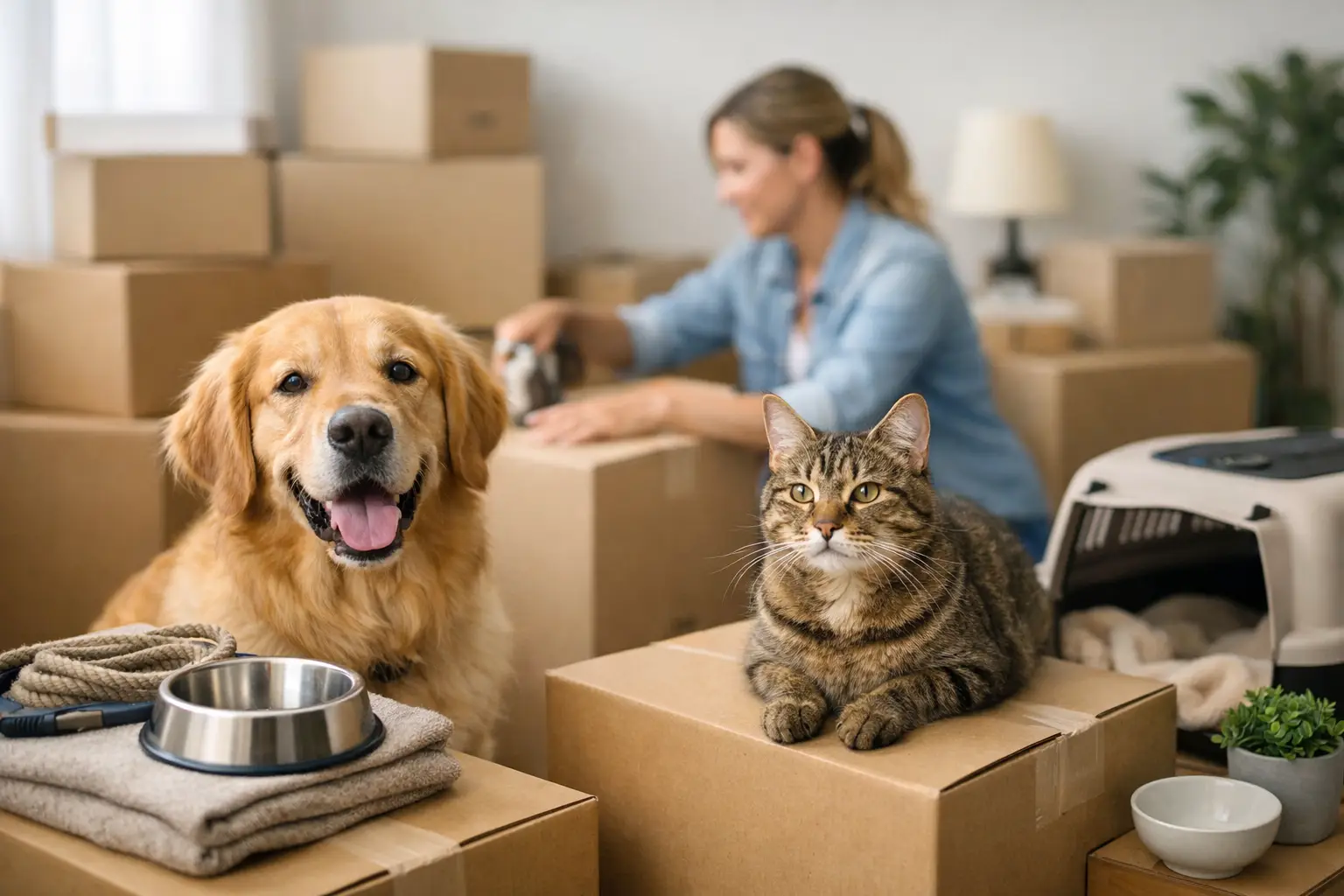
The boxes are not what unsettle most pets. It is the disruption: familiar rooms changing, doors opening all day, strangers carrying furniture, and your usual routine disappearing. A moving with pets checklist gives you a way to protect the routines and spaces your pet depends on while the rest of the household is in motion.
Every animal responds differently. A confident dog may enjoy the extra attention and new smells, while a cat may hide for days after arriving. Senior pets, anxious animals, pets with medical needs, and multi-pet households usually need more preparation. The goal is not to make moving day exciting for them. It is to make it quiet, predictable, and safe.
Start Planning Before You Pack
Pet arrangements should be one of the first items on your moving plan, not something handled after the truck is booked. As soon as you know your likely move date, decide where your pet will be during packing, moving day, and the first night in the new home.
For many households, the safest option on moving day is a trusted friend, family member, boarding provider, daycare, or veterinarian. This prevents an anxious pet from slipping out an open door or becoming distressed by the noise. If your pet must stay with you, choose one closed room away from the main traffic area and clearly tell every mover and helper that the door must stay shut.
Book the Veterinary Visit Early
Schedule a checkup several weeks before the move, especially if you are traveling a long distance or crossing state lines. Ask for updated vaccination records, prescriptions, a copy of your pet's medical history, and guidance on travel anxiety or motion sickness.
If your pet takes medication, refill it before moving and keep it in your personal travel bag. Do not pack medication in a box that may be loaded onto the truck. Ask your veterinarian about temperature requirements, since some medications should not sit in a hot car or storage area.
A move is also a good time to update your pet's microchip details. Confirm that the registry has your current phone number, then change the address as soon as your new residence is confirmed. Make sure the collar tag includes a working phone number. An ID tag with the new address can wait until after the move if your address is still changing.
Check Local Rules at Your New Address
Before you arrive, confirm pet rules that apply to your destination. Rental buildings and condo communities may have restrictions on pet size, number of animals, elevators, common areas, or leash use. Some cities require licenses within a set period after a move.
If you are moving into a home with a yard, inspect fences, gates, gaps beneath decks, toxic plants, pools, and areas where wildlife may enter. Do this before letting a dog explore off leash. For cats, confirm screens are secure and decide in advance whether they will be indoor-only or have supervised outdoor access.
Your Moving With Pets Checklist
Keep the following items together in one clearly labeled pet bag or bin. This is the set of supplies that stays with you, not on the moving truck.
- Food for at least three to five days, plus treats and a can opener if needed
- Fresh water, bowls, and a small supply of bottled water if travel conditions are uncertain
- Medication, veterinary records, vaccination certificates, and your veterinarian's contact information
- A secure carrier, crate, harness, leash, and an extra leash or collar
- Waste bags, litter, a litter box, cleaning supplies, paper towels, and old towels
- Familiar bedding, a favorite toy, and a comfort item that smells like home
- Recent photos of your pet and their microchip number in case they become separated from you
Do not use moving day to introduce a new food, crate, litter, or calming product. Even a well-intended change can cause digestive upset or make a nervous pet more wary. Familiar supplies are usually the better choice.
Make Packing Less Disruptive
Packing can be stressful long before the move itself. Pets notice changes in room layouts, stacked boxes, and altered routines. Keep feeding, walks, playtime, and medication on the same schedule whenever possible. Those repeated moments give your pet useful signals that daily life is still safe.
Pack gradually rather than turning the home upside down in one weekend. Leave your pet's bed, food station, and preferred resting areas in place until the last practical day. For cats, avoid relocating the litter box repeatedly. If it must move, shift it a short distance at a time so your cat can still find it.
Be cautious with packing materials. Tape, plastic wrap, bubble wrap, cleaning products, and open boxes can create hazards. Keep cords and sharp tools off the floor, and make sure no pet is accidentally closed inside a closet, drawer, or box.
If you are handling an estate transition or clearing a family property, the pace can be especially difficult to control. Set aside a pet-safe room before sorting begins. This keeps your animal away from unfamiliar visitors, discarded materials, and emotionally charged activity while you manage the property.
Plan the Travel, Not Just the Destination
A secure carrier or crate is the safest place for most pets during car travel. It should be large enough for the animal to stand, turn around, and lie down comfortably, but not so large that they slide around during stops and turns. Secure the carrier so it cannot shift.
Dogs should travel on a harness connected to a seat belt or in a properly secured crate. Never let a pet ride loose in the back of a moving truck, trailer, or open truck bed. Moving trucks can become hot quickly, have unpredictable noise and motion, and do not offer a safe place to monitor an animal.
Plan rest stops before leaving. Dogs may need regular leash breaks, while cats are often safer remaining in their carrier until you have reached a quiet, enclosed space. Never open a carrier outdoors, even for a pet that normally comes when called. A frightened animal can bolt in seconds.
For long drives, reserve pet-friendly lodging in advance and verify the property's current rules. Keep a recent photo available on your phone and check the room carefully each time you enter or leave. Pets can squeeze behind furniture or through a door that has not fully latched.
Air travel requires more advance research. Airline policies, carrier dimensions, seasonal restrictions, and health documentation vary. For some pets, especially brachycephalic breeds or highly anxious animals, driving or arranging another form of transport may be safer. Your veterinarian can help you weigh the options.
Set Up a Safe Room First
Before unloading the rest of the house, prepare one quiet room for your pet. Put in their familiar bed, food, water, litter box or waste supplies, toys, and a place to hide. Close windows, check screens, and place a note on the door so nobody opens it without checking.
For a dog, this may be a bedroom with a crate and a short walk scheduled once the busiest unloading period ends. For a cat, a smaller room is often better at first. A cat that is given immediate access to a large unfamiliar house may hide in an inaccessible place or become overwhelmed.
Keep cats indoors for at least several weeks after a move, even if they previously went outside. They need time to associate the new home with food, safety, and you. Dogs should be introduced to the yard on leash first, including any gates and boundaries they may later use.
Help Your Pet Settle After the Move
The first few days should be intentionally boring. Resume normal meal times, walks, litter cleaning, medication, and sleep routines as quickly as possible. Avoid hosting visitors, taking your pet to busy parks, or making major changes to their training routine right away.
Watch for stress signals such as refusal to eat, hiding, excessive vocalizing, accidents, destructive behavior, diarrhea, or changes in sleep. Mild adjustments can be normal, but ongoing symptoms deserve a call to your veterinarian. Senior pets and animals with chronic conditions may need closer monitoring after a move.
Introduce the home in stages. Let your pet become comfortable with one room or one floor before opening additional spaces. In multi-pet homes, keep familiar feeding locations and supervise early interactions if the move has made either animal tense.
A well-coordinated move leaves room for the details that matter most, including your pet's comfort. Protect their routine, keep their essentials within reach, and give them one calm place to land. Once the noise stops and the familiar food bowl appears, home starts to make sense again.

