

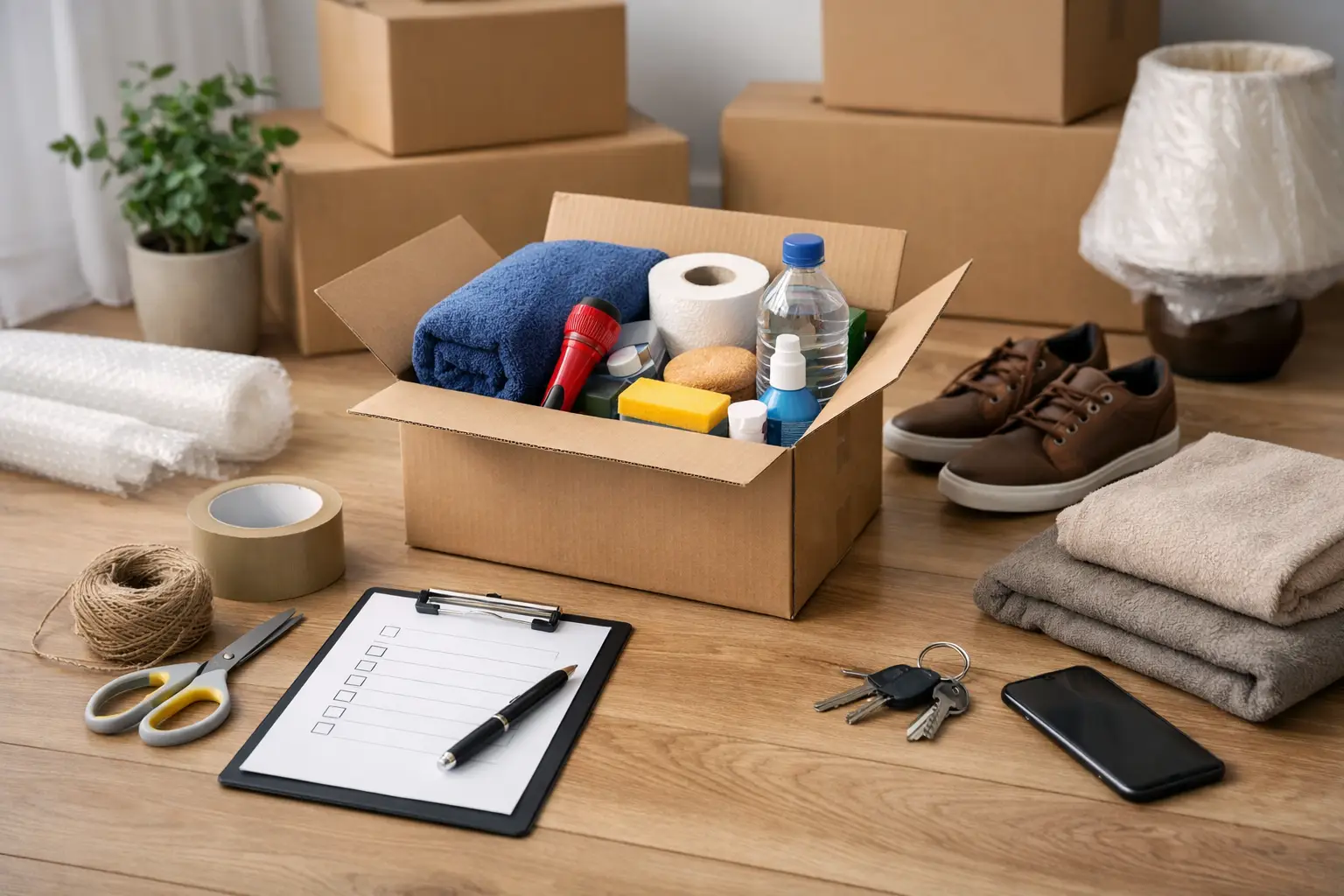
The box you need most is usually the one buried beneath a stack of labeled cartons. A practical moving day essentials checklist prevents that problem by separating the items you will need immediately from everything that can stay packed until later. It also gives you a clearer plan for the day, whether you are moving from an apartment, relocating a family home, or managing a property transition for an estate.
The goal is not to bring every possession in the car. It is to keep your critical documents, daily necessities, basic tools, and first-night supplies within reach while the rest of the move is underway.
Start With a Moving Day Essentials Checklist
Pack your essentials in clearly marked bags, totes, or small boxes several days before moving day. Keep them in a location that will not accidentally be loaded onto the truck. If you are using movers, tell the crew which items are staying with you and which boxes need to come off the truck first.
For most households, it helps to prepare three separate groups: a personal bag for each person, a household essentials box, and a folder or pouch for paperwork and valuables. Separating these categories keeps one person from searching through kitchen supplies for their medication or lease documents.
Personal items to keep with you
Each adult should pack a small overnight bag as if they are traveling for one or two nights. Include a change of clothes, sleepwear, underwear, weather-appropriate outerwear, toiletries, prescription medication, glasses or contact lens supplies, and chargers. If you have young children, pack their comfort items, snacks, diapers, wipes, bottles, and a change of clothes where they can be reached without opening boxes.
Do not place medication, passports, wallets, jewelry, keys, laptops, or financial documents in the moving truck. These items are small, valuable, and difficult to replace. Keep them with you in a purse, backpack, locked briefcase, or vehicle.
Pets also need their own plan. Bring food, water, bowls, medications, a leash or carrier, waste bags, and familiar bedding or toys. Moving day can be noisy and unpredictable for animals, so arrange a quiet room, a pet sitter, or a secure carrier until loading is complete.
Household supplies for the first 24 hours
Your household essentials box should cover the period between arriving at the new place and unpacking your main rooms. Pack toilet paper, hand soap, paper towels, trash bags, disinfecting wipes, dish soap, a sponge, and a basic first-aid kit. Add a flashlight, batteries, a phone power bank, scissors, a utility knife, tape, permanent markers, and a small toolkit with a screwdriver, hammer, measuring tape, and adjustable wrench.
Bring enough food and drinks for the day, especially if your kitchen will be packed early. Bottled water, coffee or tea supplies, easy snacks, and a simple meal can save time when you are tired and unfamiliar with the new neighborhood. Disposable plates, cups, and utensils are useful if dishes remain packed.
Bedtime deserves its own preparation. Put sheets, pillows, blankets, pajamas, towels, and basic toiletries in an easy-to-identify box. If you are assembling beds after a long day, keep the hardware and instructions in a labeled bag taped directly to each bed frame.
Documents, Keys, and Contacts
A move can be delayed by something as small as a missing key or an unreadable parking instruction. Keep all move-related paperwork in one folder, along with your identification, lease or closing documents, insurance information, utility account details, and copies of your inventory if you made one.
Before the truck arrives, confirm the important contacts in your phone: your moving coordinator, building manager, landlord, real estate agent, utility providers, and emergency contacts. Save addresses, gate codes, elevator reservation times, and both pickup and delivery instructions. A printed copy is worthwhile in case your phone battery dies or service is limited.
Your key plan should be equally clear. Separate keys for your current home, new home, garage, mailbox, storage unit, and vehicle. Label them discreetly, not with the full address. If multiple people need access, decide in advance who will carry each set.
For apartment buildings and condominiums, verify loading dock rules, elevator access, parking permits, and time restrictions. For houses, make sure driveways, walkways, and entry paths are clear. These small checks reduce waiting time and help the moving crew work safely.
Prepare the Home Before Loading Starts
The best moving day begins before anyone starts carrying boxes. Walk through every room and check that cartons are sealed, labeled on at least two sides, and not too heavy to lift safely. Mark fragile boxes clearly and identify anything that should not be stacked.
Create a simple plan for furniture. Decide what is going with you, what is being donated, and what should be disposed of before the truck arrives. Movers can work more efficiently when there is no uncertainty about whether an item belongs in the truck, stays behind, or needs special handling.
Take photos of high-value items and any existing damage to furniture or the property. This is especially helpful for rentals, condos, and office spaces where condition records may be needed later. It also gives you a reference when reconnecting electronics or reassembling furniture.
Keep cleaning supplies accessible until the final walkthrough. You may need to wipe down shelves, remove tape residue, empty a refrigerator, or clean a room after the last box leaves. Once the home is empty, check closets, cabinets, storage areas, the garage, and outdoor spaces. Open every drawer. Small but important items often get left behind in bathrooms, kitchen cabinets, and charging outlets.
Make Arrival Easier at the New Home
Before unloading begins, do a quick walkthrough of the new home. Confirm that utilities are on, toilets work, and major access points are unlocked. If possible, identify where large furniture will go before it comes through the door. Place room signs on doors or walls so boxes can be delivered to the right space from the start.
Choose one visible area for your essentials boxes and personal bags. A kitchen counter, dining table, or designated bedroom works well. Avoid setting them in a garage, basement, or crowded hallway where they can disappear among cartons.
Prioritize the rooms that make the first night manageable: bathroom, bedroom, and kitchen. You do not need to unpack every room immediately. Set up beds, hang shower curtains if needed, locate towels, and make sure basic lighting is available. Then focus on food, water, and a place to sit down.
There is a trade-off here. Unpacking quickly can make a house feel settled, but trying to finish everything on moving day often creates more stress. Open only the boxes that solve an immediate need. Keep the rest organized by room and tackle them over the following days.
Special Considerations for Estate and Downsizing Moves
Estate and downsizing moves often involve more decisions than a standard relocation. Important paperwork, family photographs, heirlooms, and items intended for relatives should be identified before packing begins. Use a written system for items that are moving, being stored, donated, sold, or retained for estate administration.
Keep estate documents, legal records, valuables, and sentimental items separate from general household contents. If several family members are involved, designate one decision-maker for questions on moving day. This avoids last-minute uncertainty over possessions that may have financial or personal significance.
A coordinated service can be particularly helpful when a property needs to be cleared, a household is being downsized, or family members live in different locations. MoveMate supports residential, commercial, and estate transitions with planning resources and direct coordination, helping reduce the administrative pressure around a complex move.
A Final Check Before You Leave
Once loading is complete, walk through the property slowly with your checklist in hand. Confirm that windows and doors are secured, appliances are empty as required, lights are off, and all keys, remotes, and access cards are accounted for. Take final meter readings or photos if they are needed for your records.
Then keep your essentials close, take a breath, and let the rest wait until tomorrow. A well-packed first-night box does more than save a trip to the store - it gives you a workable starting point when the move is finally behind you.

